Interview with the President — Prof. Dr. med. Viviane Hess
Networking, innovation and young talent in focus
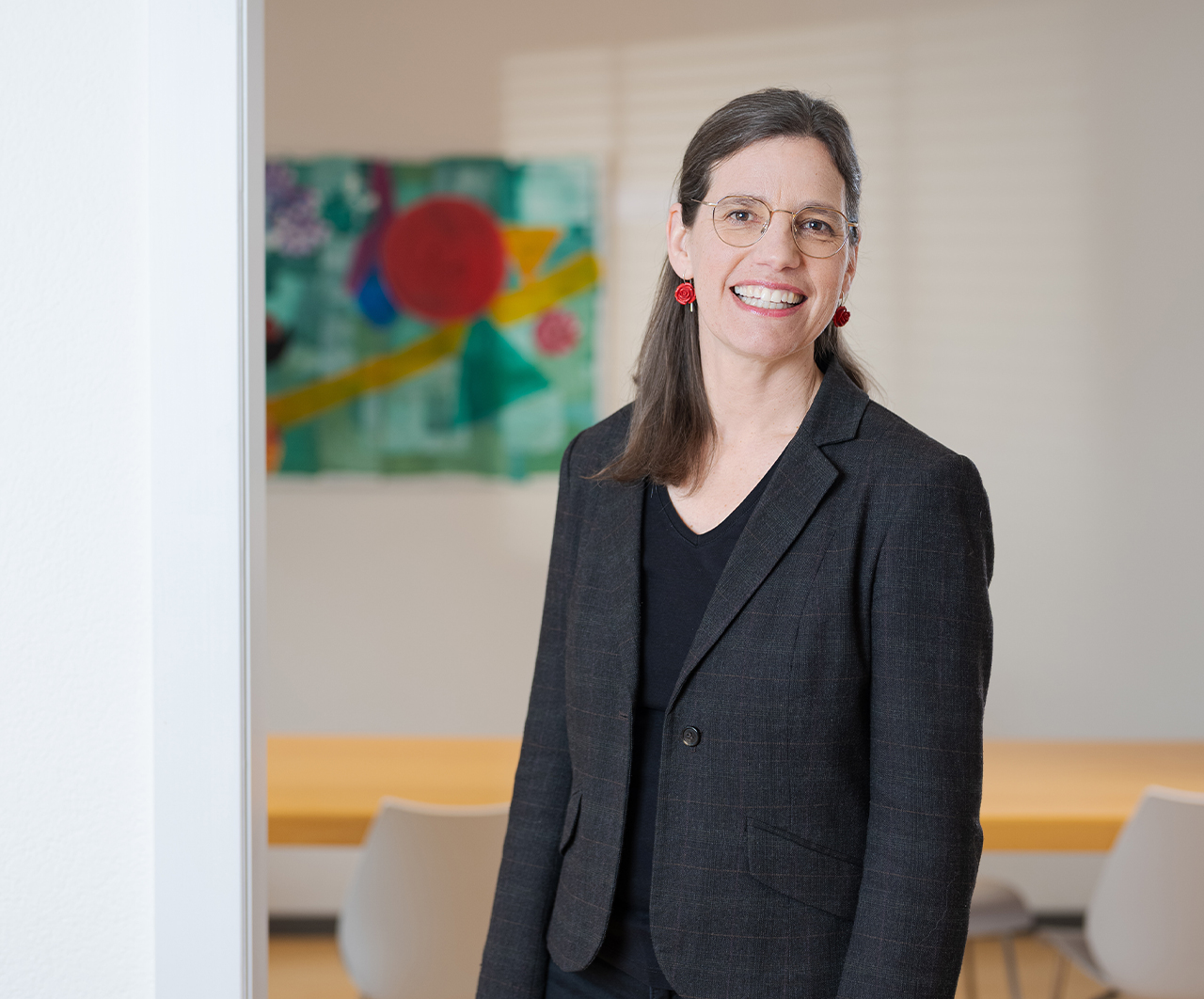
Prof. Dr. med. Viviane Hess was appointed President of the Swiss Cancer Institute on 1 January 2026.

About the person
She is Titular Professor of Medical Oncology at the University of Basel, Senior Consultant in Oncology, and a member of the leadership board of the Abdominal Tumour Centre at Universitätsspital Basel.
With many years of clinical and academic experience, she combines scientific excellence with clinical practice.
Prof. Hess also serves on the Board of Swiss Cancer Screening. She stepped down from her role as Head of Prevention and Early Detection at the Cancer League of Basel City and Basel Canton at the end of 2025 and has continued to support the organisation in an advisory capacity since 2026.
Through her recognised expertise in clinical oncology, early detection and healthcare systems, she contributes to the strategic development of the Swiss Cancer Institute during a phase of institutional consolidation and growth.
First of all, congratulations on your election as President of the Swiss Cancer Institute. How have you experienced the role during these first few weeks?
Intense and inspiring. During the first few weeks, I focused primarily on listening. On the Board, in the Competence Centre (CC), and across the network, I have encountered many intrinsically motivated individuals who are deeply committed to clinical cancer research. This is one of our organisation’s greatest strengths.
What motivated you to run for the presidency?
Despite major advances in cancer treatment, diagnostics and prevention, many challenges remain unresolved and continue to cause significant suffering for patients and their families. I have witnessed this on a daily basis since I began working as a physician.
For me, combining clinical practice and research has always been second nature. Over several decades, I worked at Universitätsspital Basel (University Hospital Basel) as a clinical trial team leader and sub-investigator, and with SAKK/SCI as a principal investigator in the Gastrointestinal Project Group and as a member of the Board.
The SCI constitutes a unique network in Switzerland – one that many other disciplines look to with admiration – and one that we aim to preserve and further strengthen. The success and goals of the SCI have always been, and continue to be, very important to me, and I am pleased to contribute to advancing them.
What goals do you pursue for the Swiss Cancer Institute in this role?
As President, I have a certain degree of scope to shape developments, which I greatly appreciate. However, I primarily see my role as one of teamwork, building on the excellent groundwork that has already been laid.
Many important foundations have been established in recent years. There is strong momentum and a new dynamism, which is also reflected externally in the name change: the SCI is becoming more modern, flexible and agile. I would like to continue along this path.
Our aim is to be the preferred partner for all outstanding cancer researchers pursuing patient-relevant research questions – always with the overarching goal of improving the quality of life and well-being of patients.
Which key priorities would you like to focus on in the coming years?
We want to focus on research projects that lead to tangible improvements for patients as well as for our healthcare system.
Therapy optimisation trials constitute one of our priorities. For example, we investigate whether a particular drug can be administered less frequently or for a shorter duration while remaining equally effective, thereby reducing side effects and lowering costs.
Another key focus is the targeted expansion of collaboration in order to integrate expertise from additional disciplines. Specialists in molecular genetics and data analysis, for instance, are playing an increasingly central role in personalised cancer medicine. Advances in personalised medicine should therefore be leveraged and further explored across the entire network, beyond the university centres.
And last but not least, we are committed to promoting young talent in clinical research, ensuring that the next generation of researchers can harness their energy and ideas to improve patient outcomes.
What is the current status of clinical cancer research in Switzerland?
Over recent decades, clinical cancer research has gained greater recognition among stakeholders in the healthcare system, partly thanks to the increasingly coordinated voice of patient organisations. Today, many people recognise how important clinical research is for the quality of care and healthcare delivery in our hospitals.
However, although this understanding has only recently become widely accepted and has globally led to an increase in clinical trials, Switzerland has unfortunately experienced a decline in the number of clinical trials, particularly academic trials. This is a worrying development, because clinical trials that could lead to significant cost savings are not being conducted, and the quality of care ultimately suffers as a result.
Cancer incidence is increasing, while mortality is declining. What does this trend mean for clinical cancer research?
More and more people are living with or after cancer, and many of them also belong to the growing population of older adults.
As a result, prevention and early detection, long-term side effects, and treatments tailored specifically to older patients or individuals with multiple conditions are becoming increasingly important. These are topics that generally receive less attention in pharmaceutical research. As a result, we see it as our responsibility to address these research questions.
«Hospital management must recognise that clinical research is not a luxury – it is a necessity for maintaining the quality of care and ensuring access to innovation.»
Clinical cancer research is carried out by oncologists in addition to their demanding clinical duties. What challenges does this entail – and what is needed to ensure the long-term sustainability of this research?
Time and funding. Hospital management must recognise that clinical research is not a luxury – it is a necessity for maintaining the quality of care and ensuring access to innovation.
This area therefore also requires investment. At the same time, digitalisation now offers far greater opportunities to answer important research questions using insights from routine clinical practice through “real-world evidence” trials. This potential could be utilised much more extensively with relatively little additional effort.
How does the collaboration between the SCI and the pharmaceutical industry work?
As the majority of our members are oncology and haematology specialists who primarily work with drug therapies, the pharmaceutical industry is an indispensable partner both in everyday clinical practice and in research.
The innovative capacity present in Switzerland – ranging from start-ups to large pharmaceutical companies – is enormous. We maintain close dialogue in order to combine our respective strengths for the benefit of patients.
What role do patients themselves play in clinical cancer research at the SCI?
The SCI Patient Council has supported researchers for many years. Patient voices should – and must – be listened to even more closely in the future.
Workshops with patients held during the preparation of the National Cancer Plan once again demonstrated that their input is indispensable – not only in prioritising and formulating research questions and methodologies, but also in strengthening the public and political recognition of clinical cancer research.