
Interview with a Board Member
Interview with a Board Member Silvia Schenker
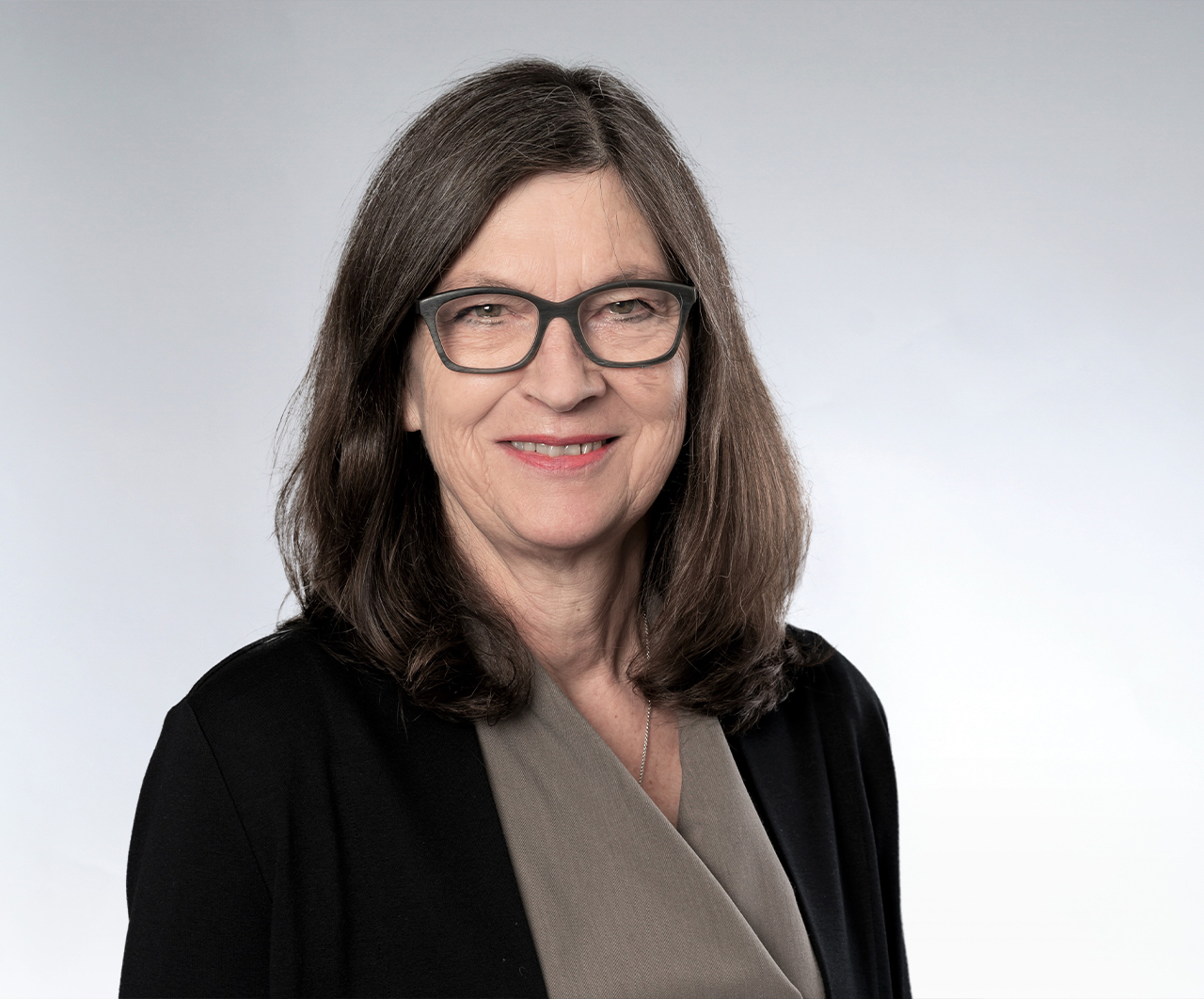
Since 2022, Silvia Schenker has been a member of the Board of the Swiss Cancer Institute, where she contributes her many years of experience in health policy as well as her extensive network.

About the person
From 2003 to 2019, she represented the Canton of Basel-Stadt in the Swiss National Council. During this time, she served on the Social Security and Health Committee (SGK) and the Political Institutions Committee (SPK), where she played a key role in shaping numerous health policy debates at the national level.
From 2006 to 2008, she also served as Vice-President of the Social Democratic Party of Switzerland (SP). From November 2006 to 2012, she was President of the Swiss Health League Conference (Geliko) and was a member of the Board of Directors of Universitätsspital Basel (University Hospital Basel) from 2012 to 2025.
At the core of her commitment are social, family, health, and asylum policy — always with a clear focus on social responsibility and sustainable solutions
You stood for re-election to the Board of the Swiss Cancer Institute in late November 2025. What does this role mean to you personally?
When I was asked almost four years ago whether I would be willing to serve on the SCI Board (SAKK at the time), I knew very little about the organisation and its work. The more intensively I engaged with clinical cancer research, the more aware I became of its enormous importance to patients.
Being able to continue contributing to this work fills me with great joy and gratitude. The fact that our collaboration on the Board is so constructive – as well as our excellent rapport – is the icing on the cake of this commitment.
You are not an oncologist, yet you are strongly committed to clinical cancer research. How do you see your role and sphere of influence on the Board of the Swiss Cancer Institute?
I don’t have a medical background, which means I sometimes find myself in situations where I do not understand everything straight away. However, because I want to fully grasp the issues, I ask many questions. At the beginning, that felt somewhat uncomfortable.
Over time, however, I realised that these questions often spark new discussions and help clarify matters.
Furthermore, I see my role on the Board as representing a part of the population we should engage even more effectively.
«Clinical cancer research brings hope to patients and therefore makes an important contribution to supporting patients and their families.»
What fascinates you most about clinical cancer research and about the work of the Swiss Cancer Institute?
Clinical cancer research brings hope to patients and therefore makes an important contribution to supporting patients and their families.
What particularly impresses me is the creativity and dedication with which all employees of the Swiss Cancer Institute – regardless of their role or responsibilities – work to find answers to questions arising directly from patient care.
For me, there is no doubt that this work is worthwhile – even if a trial fails to yield the desired results.
Without clinical cancer research, there would be no new medicines and no optimised therapies. Nevertheless, a large proportion of research funding goes into basic research. In your view, how can we raise greater awareness among policymakers and the general public of the importance of clinical cancer research?
More people should understand what researchers actually do: which questions they aim to answer and what these answers could mean for patients.
Clinical research is closer to patients’ everyday lives than basic research and can – in the best case – lead directly to tangible improvements in everyday life.
If we succeed in raising awareness of the importance of clinical cancer research across society, policymakers will also take notice. This requires perseverance and the conviction that change is possible.
Finally: if you had three wishes, what three developments would you like to see for the Swiss Cancer Institute over the next five years?
First, I hope that the positive momentum of recent months continues and that the people working at the Competence Centre and on the Board continue to develop the organisation together.
Second, I hope that our members’ network – the presence of the SCI throughout Switzerland – can be used even more effectively. This is one of the Institute’s great strengths.
And third, I hope that the SCI succeeds in making its work tangible for even more people and thereby raising public awareness of the importance of clinical cancer research.